The Science: Why Your Training Needs to Change After 30
As we leave our twenties, our bodies begin a subtle but significant transition. It's no longer as forgiving of late nights, inconsistent habits, or haphazard workouts. Understanding these physiological shifts is the first step to training smarter.
After age 30, most people experience a gradual decline in muscle mass (sarcopenia), bone density, and metabolic rate. These changes don't just affect your appearance; they are directly linked to your long-term health, increasing the risk of chronic diseases and reducing functional strength. The good news is that this decline is not inevitable. The right type of exercise can dramatically slow, and in some cases, even reverse these markers of aging.
This is the foundation of the 80/20 model, a concept popularized by exercise physiologist Dr. Stephen Seiler after observing the training habits of elite endurance athletes. He found that the world's best were not grinding out punishing workouts every day. Instead, they spent the vast majority of their time building a massive aerobic base with easy, low-intensity training.
- The 80% (Low-Intensity): This is primarily Zone 2 training, a level of effort where you can comfortably hold a conversation. The magic of Zone 2 lies in its effect on your mitochondria-the power plants within your cells. Consistent Zone 2 work improves mitochondrial efficiency and density, enhancing your body's ability to use fat for fuel, building deep endurance, and supporting cardiovascular health. It’s the broad, sturdy base of your fitness pyramid.
- The 20% (High-Intensity): This portion is dedicated to hard efforts that challenge your cardiovascular system and muscles. This includes High-Intensity Interval Training (HIIT) and, crucially, resistance training. These workouts improve your VO2 max (a key predictor of longevity), stimulate beneficial hormonal responses, and build lean muscle. Research even shows that high-intensity exercise can help preserve the length of your telomeres, the protective caps on your DNA, effectively slowing the aging process at a cellular level.
This combination of low-intensity volume and high-intensity stress creates a powerful synergy, building a body that is both durable and powerful.
🎥 Peter Attia, M.D. on Zone 2 Training for Longevity
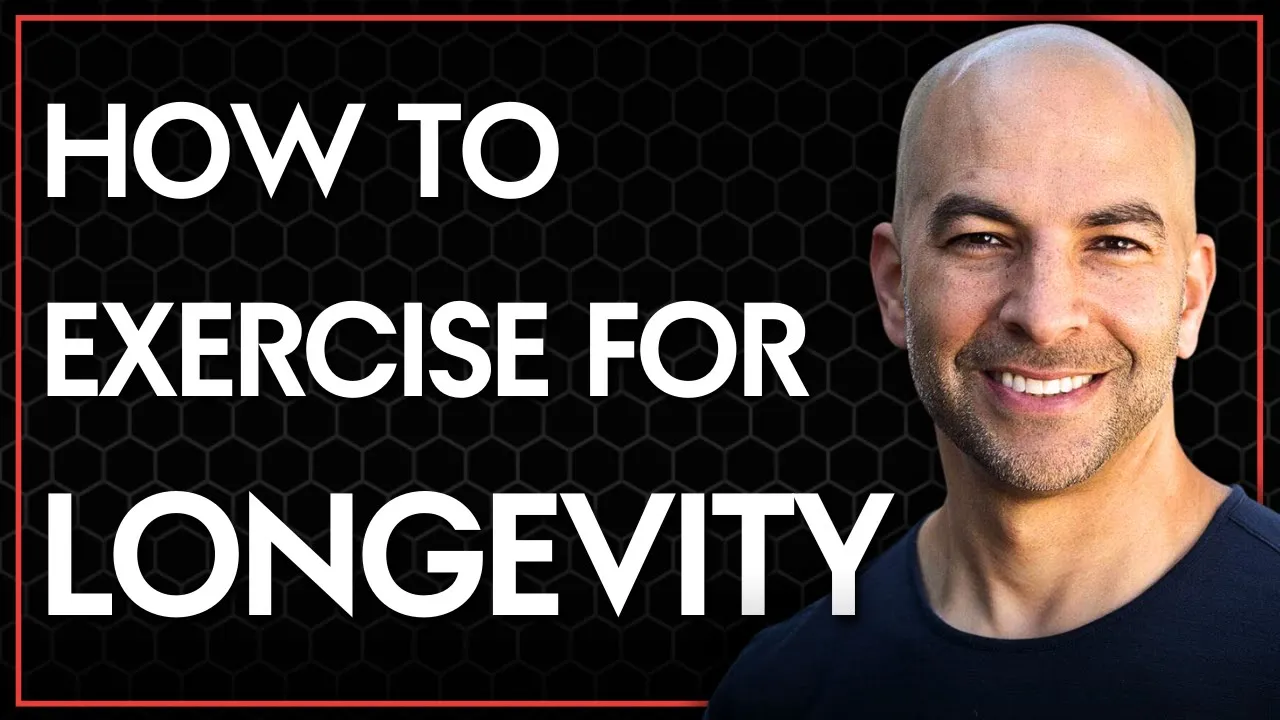
Dr. Attia breaks down the critical role of Zone 2 cardio in improving metabolic health and why it's a cornerstone of his exercise framework for longevity.
🎥 Andrew Huberman, Ph.D. discusses tools for measuring and increasing VO2 Max

Huberman explains what VO2 max is and why it's so tightly correlated with both healthspan and lifespan, offering protocols to improve it.
Practical Implementation: Your 80/20 Training Week
Translating the science into a weekly schedule is straightforward. The goal is consistency, not complexity. The American Heart Association recommends at least 150 minutes of moderate-intensity cardio or 75 minutes of high-intensity exercise per week as a minimum baseline.
The 80%: Building Your Aerobic Foundation
This is the bulk of your training time. Aim for 2 to 4 sessions per week. Remember, the key is maintaining a conversational pace. If you use a heart rate monitor, this typically corresponds to 60-70% of your maximum heart rate.
Protocol - The 80% Aerobic BaseFrequency: 2-4 sessions per week.Duration: 30-60 minutes per session.Intensity: Zone 2 (easy, conversational pace).Examples: Brisk walking on an incline, light jogging, cycling on a stationary bike, or swimming.Tracking: Use DailyLens.app to log duration and your perceived effort. Note how your energy levels feel on these days.
The 20%: Strength, Power, and Intensity
This is where you push the boundaries. For individuals over 30, this 20% must include dedicated strength training. It is the single most effective tool to combat age-related muscle and bone loss. Aim for 1 to 2 high-effort sessions per week.
Protocol - The 20% High-Effort Work
Frequency: 1-2 sessions per week (ensure adequate rest between sessions).
Workout A (HIIT): 5-minute warm-up, followed by 6-8 rounds of (45 seconds max effort / 75 seconds active recovery), then a 5-minute cool-down. Max effort could be sprints (on a bike or running), kettlebell swings, or burpees.
Workout B (Full-Body Strength): Focus on compound movements that recruit multiple muscle groups. Aim for 2-3 sets of 6-10 repetitions for each exercise. Examples include Goblet Squats, Push-Ups, Dumbbell Rows, and Romanian Deadlifts.
Tracking: In DailyLens.app, record your HIIT intervals and the weights/reps for your strength session. Monitor your recovery via HRV and sleep scores the following day.
🎥 Andy Galpin, Ph.D. on Strength Training After 40

Dr. Galpin provides evidence-based guidelines on how to structure strength training for health and longevity as you age, covering frequency, intensity, and exercise selection.
Journaling Integration: Optimizing with DailyLens.app
The 80/20 rule provides the map, but self-awareness is the compass. Using a journaling tool like DailyLens.app allows you to move from a generic template to a personalized protocol. Consistent tracking helps you understand how your body is responding and when to adjust.
Key Metrics to Track:
- Workout Logs: Note the type, duration, and intensity of each session (e.g., "45-min Zone 2 cycle" or "Full-body strength, 8/10 effort").
- Subjective Scores: Rate your sleep quality, mood, energy, and muscle soreness on a 1-10 scale each morning.
- Objective Data: If you use a wearable, log your nightly HRV, RHR, and total sleep time. A rising HRV and a falling RHR are signs of improving aerobic fitness.
Sample DailyLens.app Journal Prompts:
- "How did my energy levels feel during today's Zone 2 session? Was I able to maintain a conversational pace?"
- "It's the day after my HIIT workout. How is my muscle soreness? How did my HRV and sleep scores respond?"
- "Looking back at the last two weeks, have I maintained the 80/20 balance? Where can I make adjustments?"
Summary & Key Takeaways
Training after 30 isn't about finding more time for the gym; it's about getting more life out of your time. The 80/20 rule is a focused, sustainable approach to building a body that is resilient, energetic, and built for the long haul.
- Prioritize a Strong Foundation: Dedicate 80% of your training volume to low-intensity Zone 2 cardio. This builds the mitochondrial and cardiovascular base necessary for both performance and healthspan.
- Make Your Hard Days Count: Use the remaining 20% for high-effort workouts. This must include dedicated resistance training to fight muscle loss, alongside HIIT sessions to boost VO2 max.
- Strength is Non-Negotiable: After 30, resistance training is no longer optional. It is essential for maintaining metabolic health, bone density, and functional independence for decades to come.
- Consistency Trumps Intensity: Long-term adherence to a sustainable plan will have a far greater impact on your longevity than chasing short-term, high-intensity goals that lead to burnout or injury.
- Listen, Track, and Adapt: Use a tool like DailyLens.app to monitor your objective metrics and subjective feelings. This data-driven approach allows you to personalize the 80/20 framework to your unique physiology and lifestyle.