
01
Less task paralysis
Break the freeze by capturing the noise quickly and reducing the size of the next action until it feels startable again.
DailyLens helps adults with ADHD or AuDHD manage task paralysis, overwhelm, context switching, and dropped tasks through voice capture, fast resets, low-friction routines, and AI guidance that turns noise into a clearer next step.
DailyLens should make it easier to unload the noise fast, so the next action becomes visible before another tab, thought, or interruption takes over.
Short breathing and regulation loops help users come back from overstimulation without pretending the nervous system is not part of the task.
For adults with ADHD or AuDHD, and for anyone living with attention volatility, sensory overload, and task paralysis who needs support that survives real life.
Break the freeze by capturing the noise quickly and reducing the size of the next action until it feels startable again.
Voice and text capture help preserve the thought before it disappears under the next interruption, tab, or demand.
Short resets and tiny routines help users shift between work, home, recovery, and planning with less nervous-system shock.
When less effort is wasted on re-finding the thread, there is more capacity left for work, relationships, and recovery.
DailyLens helps adults with ADHD or AuDHD work with attention and overwhelm more realistically, instead of adding another rigid system that breaks the moment the day gets loud.
Useful ideas, reminders, and decisions vanish under the next distraction, so users keep re-starting the same mental loops.
Every interruption creates extra activation cost, which makes returning to the original task feel heavier than it should.
The more rigid the system, the faster it collapses when overload, sensory noise, or emotional friction enters the day.
Voice and text logging reduce the time between thought and capture, so fewer important threads disappear.
AI reflection and lightweight routines help reduce a messy mental pile into one believable next step.
Resets, planning, and reflection stay short enough to remain usable even when the day is already overstimulating.
DailyLens is designed for days when typing is too slow, plans keep breaking, and the nervous system is already carrying too much noise.
When writing creates extra friction, speaking helps users save the thought, task, or emotion before it disappears.
A brief breathing or grounding loop can lower the internal noise enough to make re-entry possible.
Simple recurring steps make it easier to start, resume, or close tasks without demanding perfect consistency.
Spot recurring triggers around overwhelm, context switching, time blindness, and task avoidance before they repeat unnoticed.

Use a short note or routine to define what matters before notifications, tasks, and other people start pulling your attention apart.

A fast reset plus one reduced next step helps users return without relying on shame, panic, or pure willpower.

Unload the unfinished threads and name one next step so tomorrow does not begin with yesterday's mental clutter.
See a believable workflow for adults whose focus is inconsistent, whose tasks pile up easily, and whose best plan often fails under real pressure.
Use voice or text to catch the task, feeling, or idea while it is still available instead of trusting working memory to hold it.
Reduce the pile into something smaller, visible, and emotionally easier to enter before the brain rejects it as too much.
Use a short reset and reflection to get back in, instead of losing the rest of the day to avoidance or overstimulation.
Articles that support this audience around procrastination, dopamine overload, regulation, and sharper focus.
ADHD focus strategies with AI journaling and practical tools. Beat procrastination, manage distractions, and unlock your flow state. Transform overwhelm into clarity, upgrade your productivity habits, and harness the power of AI to create a life where focus fuels your success.
Read articleProcrastination often relieves discomfort in the moment. Learn how to identify the emotion behind avoidance, lower the cost of starting, and change the pattern.
Read articleWe've created a generation of digital zombies, and we're calling it "normal childhood development." The euphemistically named "iPad kids" aren't just screen-time enthusiasts - they're the unwitting subjects of the largest uncontrolled neurological experiment in human history. And the preliminary results? Absolutely terrifying.
Read articleIn the high-stakes world of professionals and performance enthusiasts, chronic stress can derail even the sharpest minds. But what if you could reset from a "fight or flight" state to one of deep focus and recovery in just minutes?
Read articleFeatures
Use each tool on its own or together with the others, on your phone or computer. Start with one and add more as you need them.
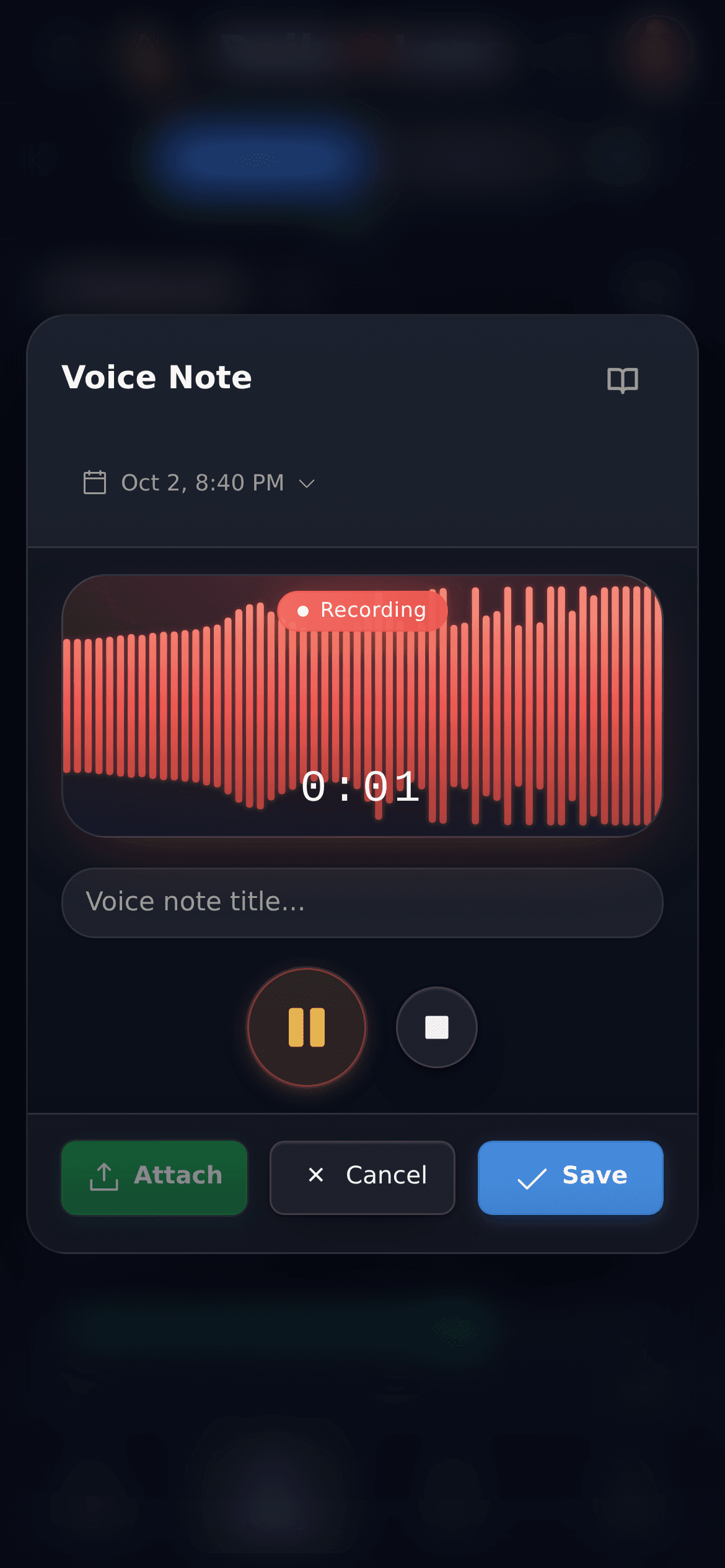
Speak instead of typing. Each recording is saved as a journal entry and transcribed in the background, within your plan's limits. Voice analysis is part of Pro.
Write a few lines or a full formatted entry and add your mood. Text entries are saved on your device first and sync once you are online.
Related: AI journal app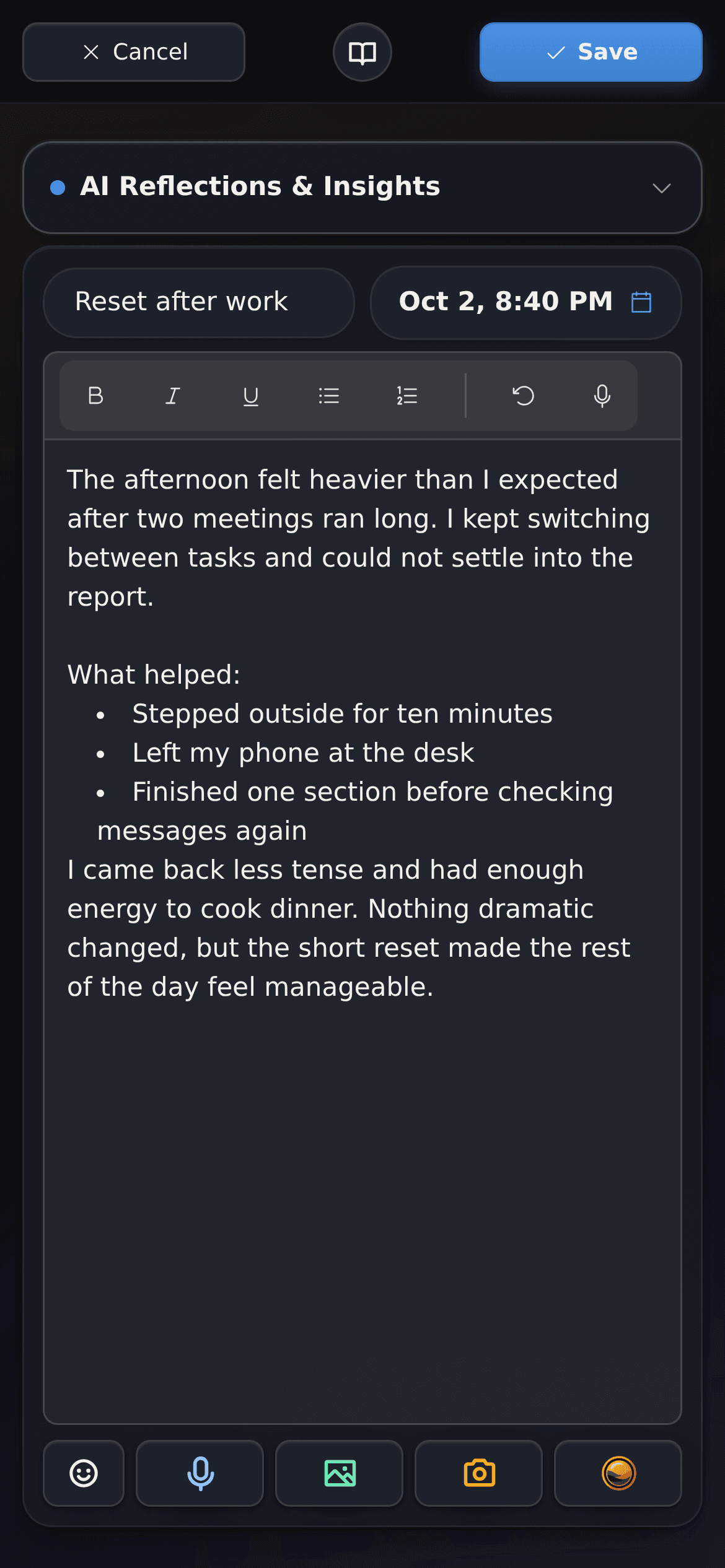
The Today tab groups your practices by time of day, from wake-up to bedtime. Mark each one done and see your protocol progress and streaks.
Related: Habit tracker app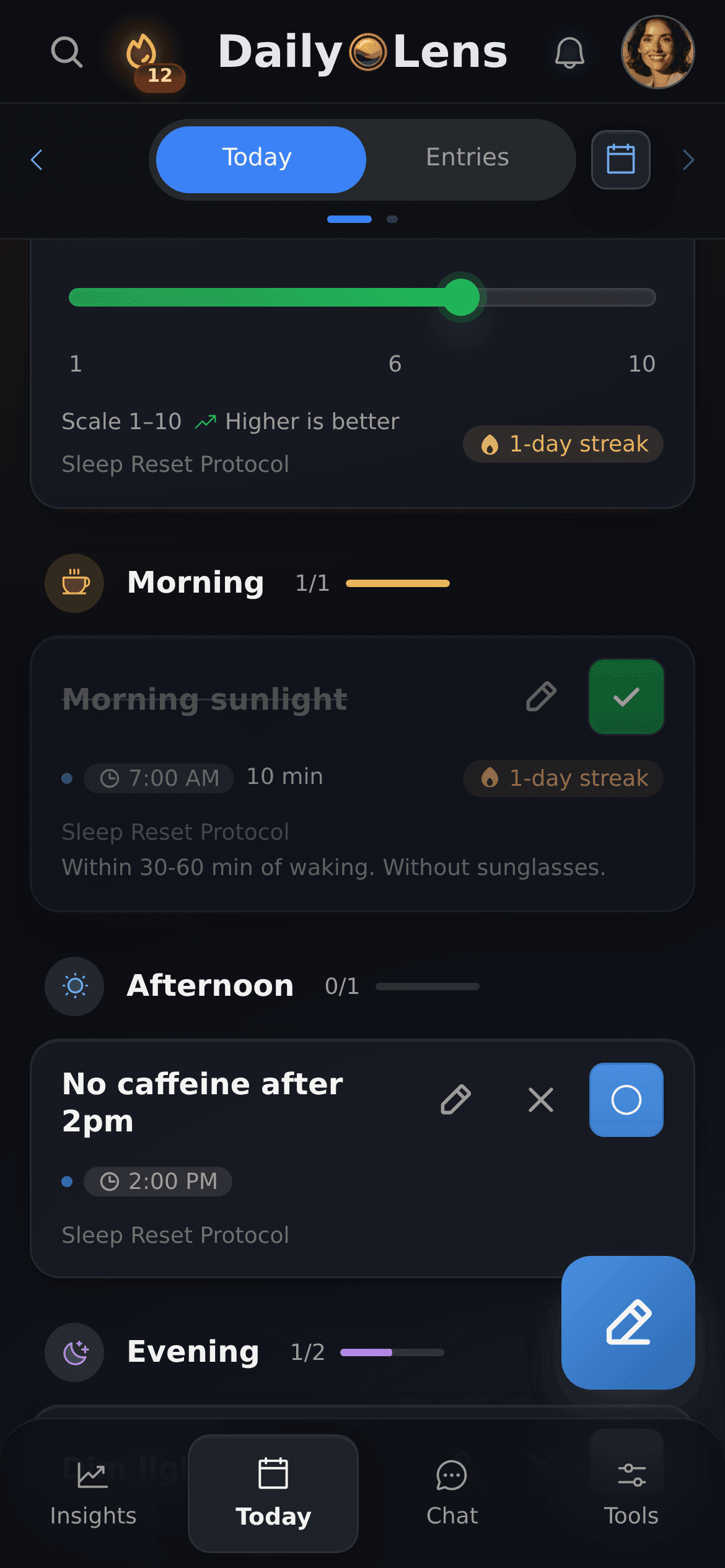
Open Quick Track from the + button and rate sleep quality, energy, or anything else you track in a few taps.
Related: More energy after work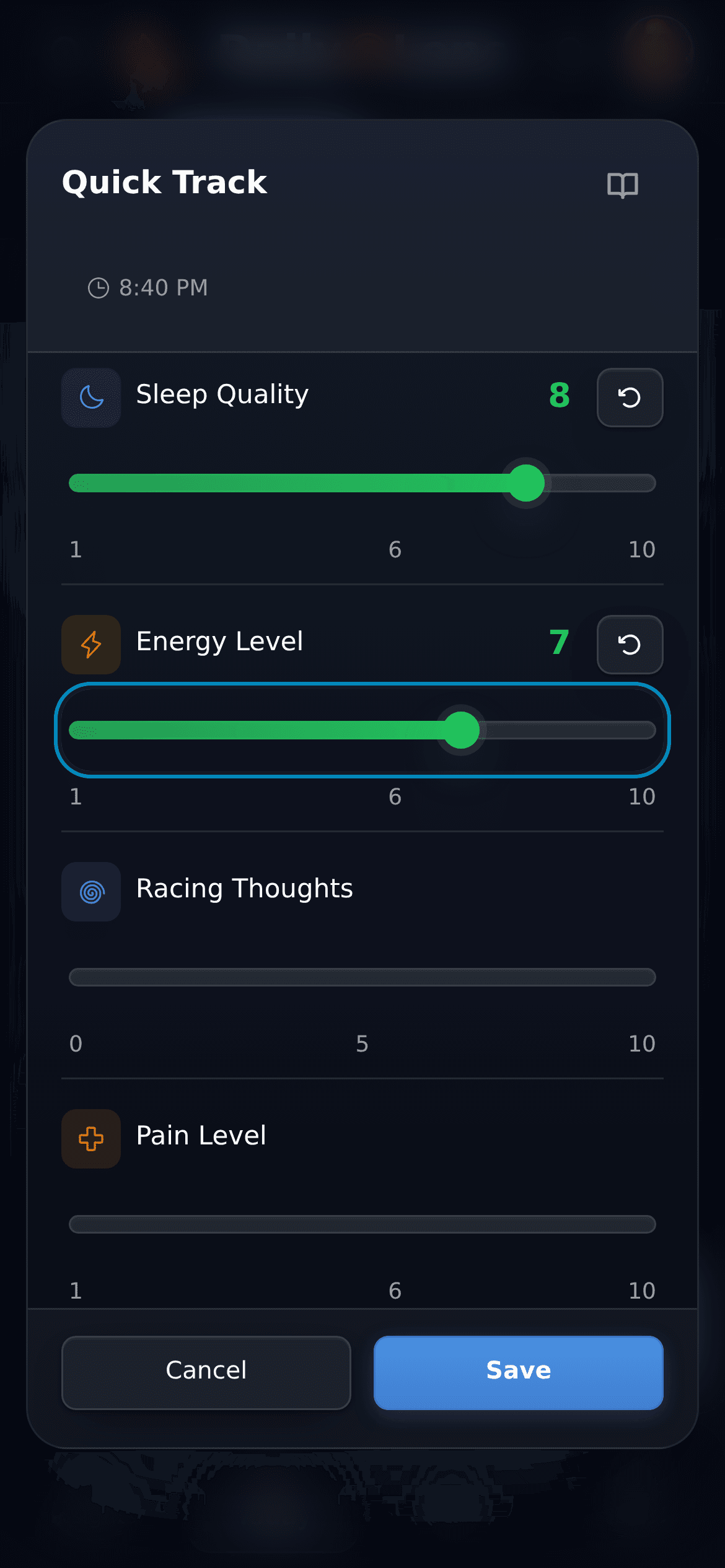
Start from a ready-made protocol, such as a sleep reset, or build your own with steps for specific times of day.
Related: Protocol tracker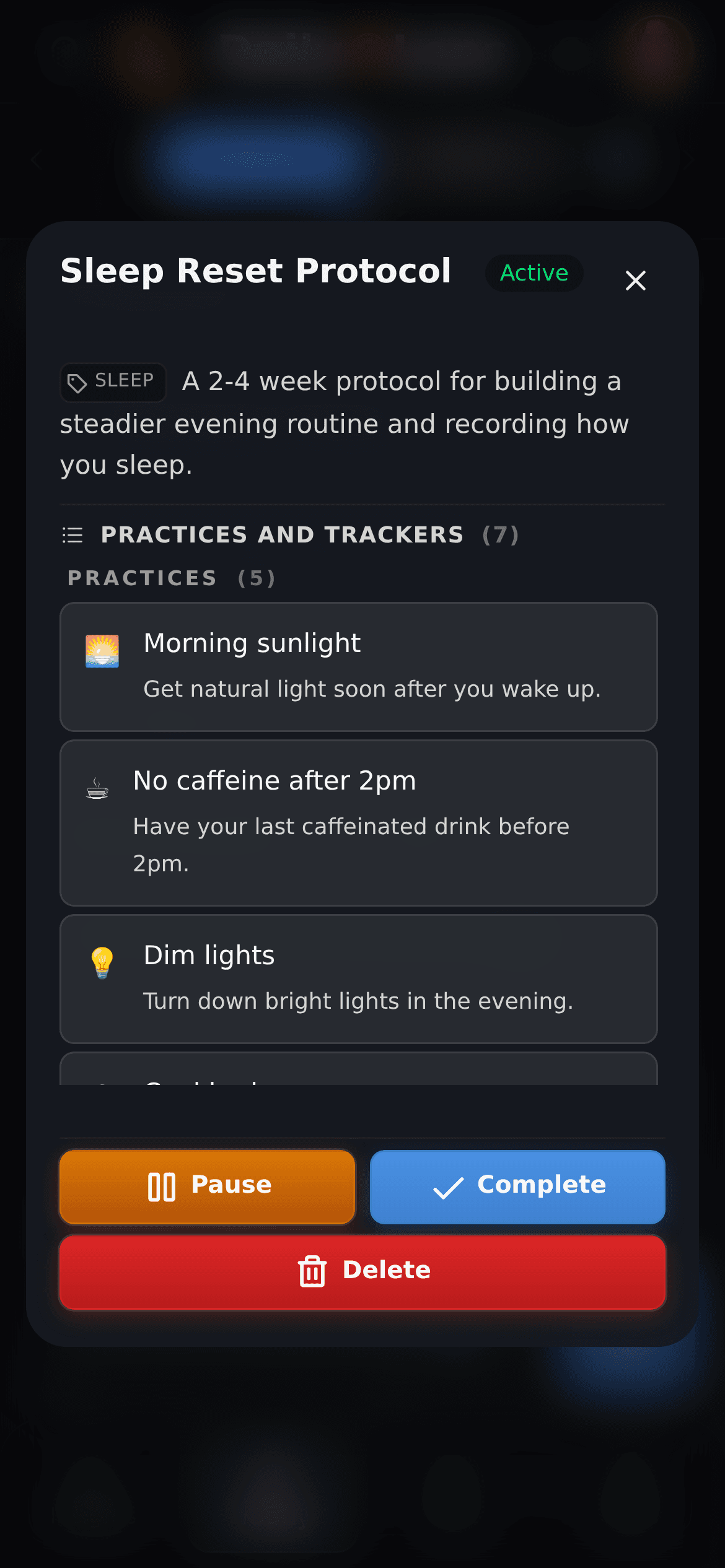
See your consistency, mood, and activity over recent days. On eligible plans, you also get daily and weekly reports on what you recorded.
Related: Biohacking and performance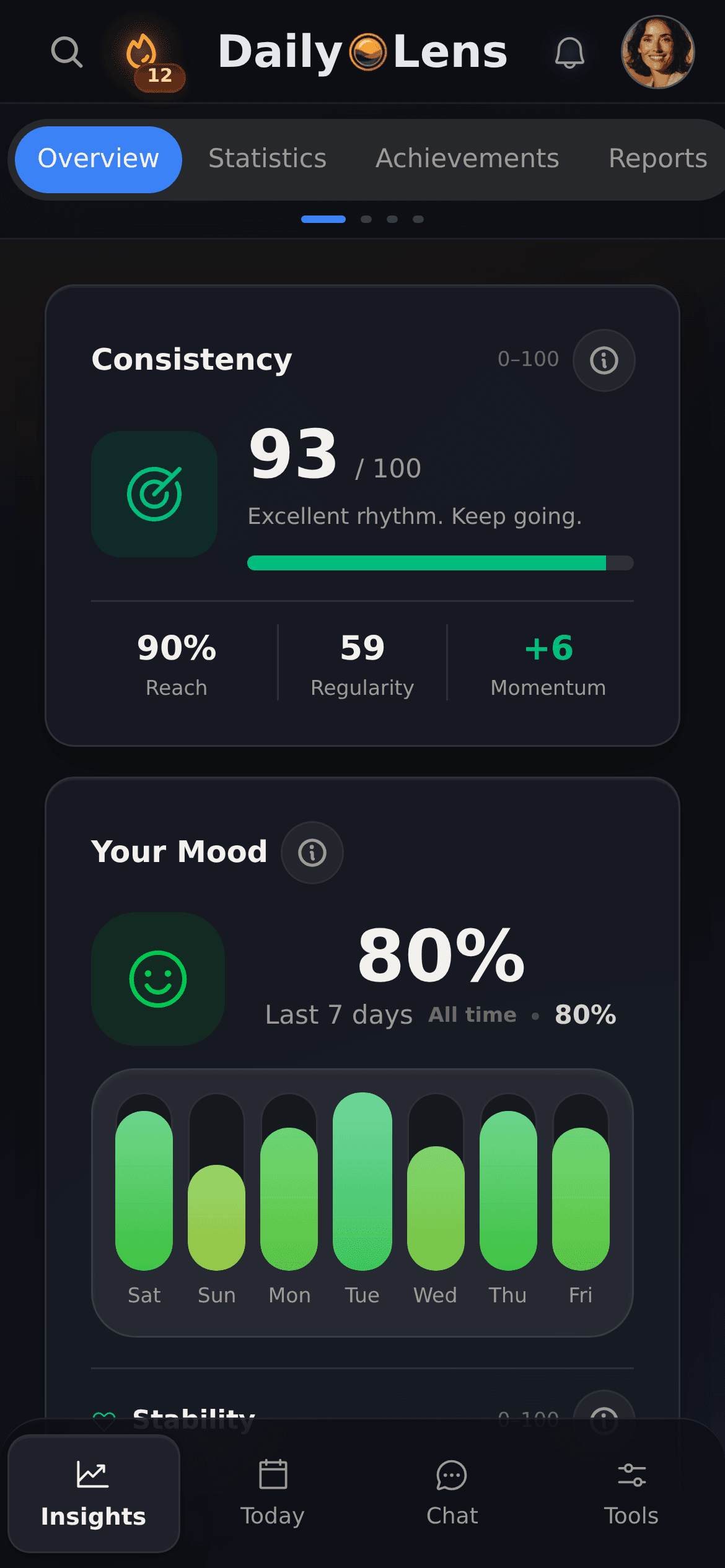
Ask about your recent entries and routines. Suggested changes are applied only after you approve them.
Follow box breathing, 4-7-8, or belly (diaphragmatic) breathing with on-screen guidance for each phase.
Get optional morning and evening reminders at times you choose.
Use DailyLens in your browser or install it on your phone or computer. You can write text entries offline.
Voice transcription and custom protocols have limits on the free plan. AI chat, reports, and voice analysis are part of Pro.
Clear answers for people who need support without hype, guilt, or medical overclaiming.
No. DailyLens is for adults with ADHD or AuDHD and also for people dealing with attention volatility, overwhelm, and task paralysis without making the product dependent on formal labels.
No. DailyLens is a support tool for reflection, routines, and pattern awareness. It does not replace medical care, therapy, coaching, or prescribed treatment.
Yes. That is one of the main advantages. Voice capture lowers friction when writing feels too slow, too effortful, or mentally unavailable.
Yes. The page is built around smaller next steps, quick resets, and lightweight routines that remain usable when energy, attention, and emotional capacity fluctuate.
Less paralysis. Less overload. More clarity, recovery, and forward motion that feels realistic.
One product, different starting points. Choose the topic closest to what you want to understand or improve.
Track repeatable protocols and supplements alongside how your day actually went.
Review recent entries with AI assistance when your plan and recorded context support it.
See routines alongside what you wrote about the day, including what changed when a routine was missed.
Use short practices and recovery routines, then review what tended to drain or support your energy.
Organise morning, sleep, and focus protocols into clear steps and schedules, then record what changed.